

MaiMusic
Player Artists Explore Learn Practice Resources Opinion Services About Contact Us
Mediterranean Pop · Arabic Trap · Mizrahi Fusion

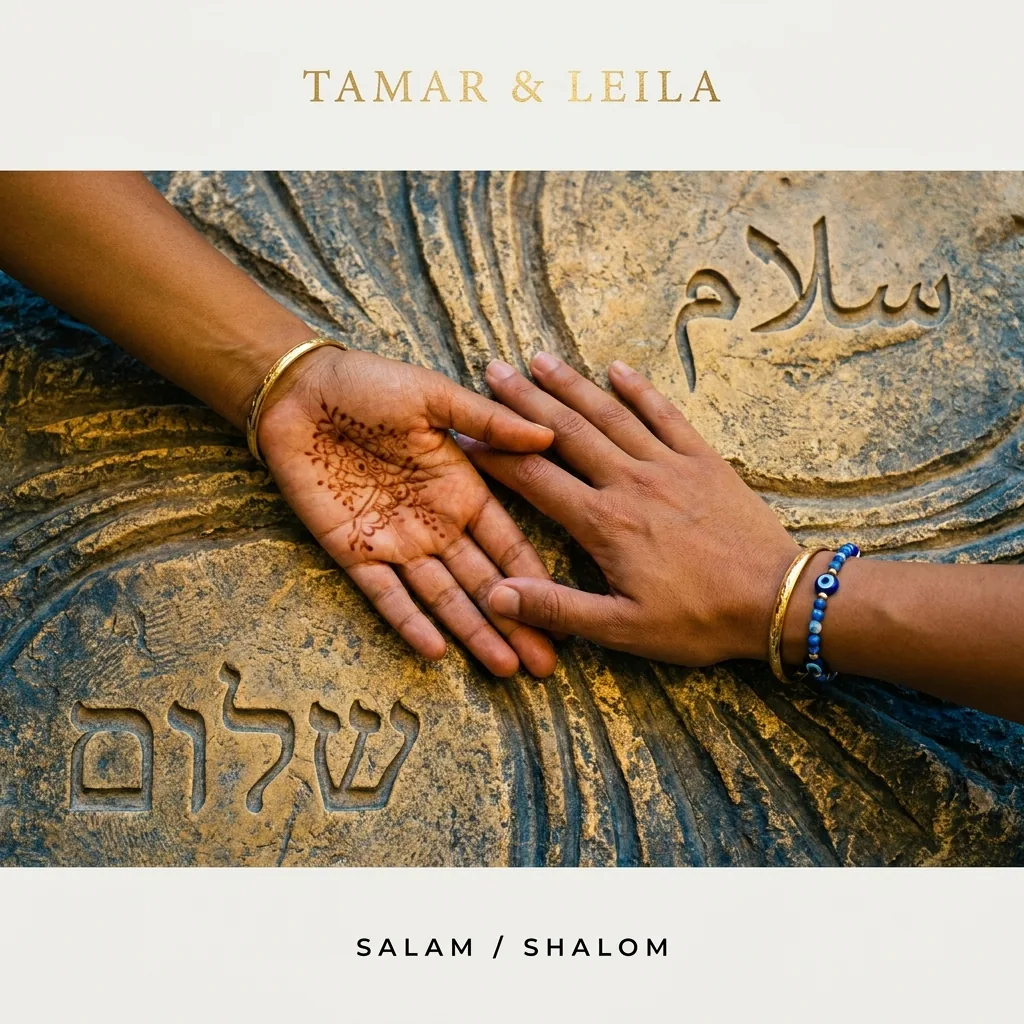
TAMAR & LEILA

שלום עליכם · وعليكم السلام

"Someone asked us once if we're a peace project. We said no — we're a pop duo. That's the whole thing."

Two young Mediterranean women, eighty kilometers apart on the same coastline. Tamar Haddad, 22, Yemenite-Israeli, from Rosh HaAyin. Leila Khalidi, 23, Palestinian, from Haifa. They met at a maqam workshop in February 2024 and haven't stopped writing together since. The hook is whether it makes you dance.

Listen Now 1 Album · 10 Tracks · 3 Languages

The Duo

Two voices, two languages, one coastline.

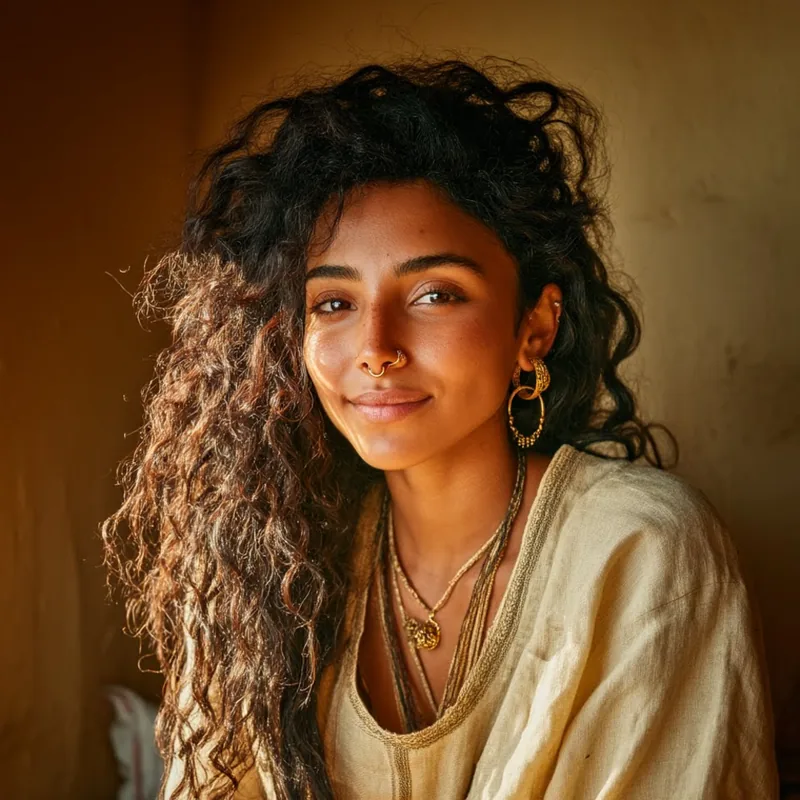
Tamar Haddad
Tamar Haddad

TAMAR

Yemenite-Israeli · 22 · Rosh HaAyin

Grew up five streets from her grandmother Sarah, learning Yemenite diwan singing in Judeo-Yemenite Arabic before she met pop music. Her signature is Yemenite melismatic vocal ornament applied to modern pop phrasing — a Middle Eastern flavor that resists easy placement.

Lead vocals Melismatic HE · Judeo-Yemenite AR
Leila Khalidi
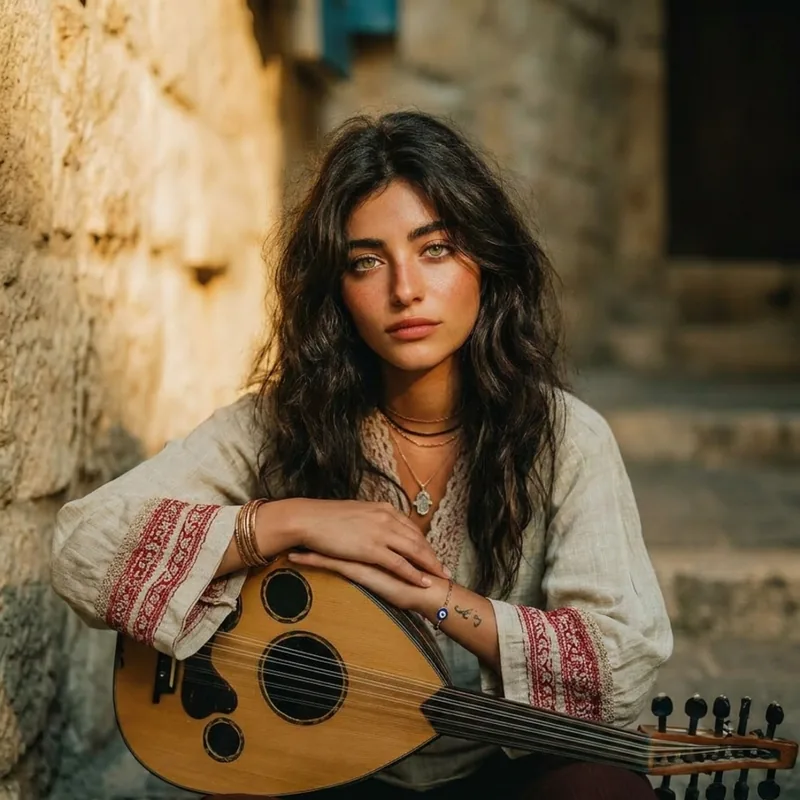
Leila Khalidi

LEILA

Palestinian · 23 · Haifa

Tajweed study and the occasional Sufi dhikr circle from six to sixteen — both traditions built on the same maqam vocabulary; oud with her uncle Ayman from ten; University of Haifa B.A. in Composition with a thesis on maqam in contemporary Arab pop. Her grandmother Samira was born in Haifa in 1936 and stayed through 1948.

Lead vocals Oud AR · HE · EN · FR

How they met

Beit HaGefen, Haifa — February 2024. The "Maqam / Mizmor" workshop, led by Amal Murkus and Dudu Tassa. Day three: a compositional exercise on a mode shared by both traditions — Hijaz in Arabic, Ahavah Rabbah in Jewish liturgy. Same mode, two names. Four minutes of music became forty-five. Amal's comment: "Whatever this is, keep doing it." They kept doing it.

A July 2024 phone video of them performing the Salam/Shalom hook at Leila's kitchen table — oud on her lap, Tamar harmonizing — crossed 6 million views in a week. WAVELENGTH signed them in October.

SALAM / SHALOM
Debut Album · May 15, 2026

SALAM / SHALOM

Same Semitic root, S-L-M — peace, wholeness, well-being.

SALAM / SHALOM is not a peace album. It is a pop album by two young Mediterranean women who happen to have grown up in two languages that share a root. The songs are about Friday nights, grandmothers, bad-idea crushes, 3 AM doubts, and the specific feeling of going to bed at sunrise after a good party. The shared-Semitic-cognate hook is the album's structural device.

10 tracks · ~34 min · AR / HE / EN · Maqam Hijaz & Bayati
01
Shalom Aleichem / Wa ʿalaykumu s-salam
The greeting as a dance hook
Hijaz Duet
HE · AR · EN 108 BPM 4 takes
Version A
Version B
Version C
Version D
02
Yalla
"Let's go" — Friday night
Bayati Duet (Tamar)
AR · HE · EN 118 BPM
Version A
Version B
03
Ana & Ani
"I am" in both languages
Hijaz Leila
AR · HE · EN 102 BPM
Version A
Version B
04
Habibi / Yakiri
"My beloved" — love song
Bayati Duet
AR · HE 95 BPM
Version A
Version B
05
3 AM (Layla / Laila)
"Night" — the doubt track
Hijaz Tamar
HE · AR · EN 88 BPM 4 takes
Version A
Version B
Version C
Version D
06
Teta / Savta
"Grandmother" — both of ours
Bayati Duet
AR · HE · JYA 82 BPM
Version A
Version B
07
Medina
"City/State" — hometown
Nahawand Leila
AR · HE · EN 106 BPM
Version A
Version B
08
Halas / Dai
"Enough" — the frustration
Hijaz Duet
AR · HE · EN 115 BPM
Version A
Version B
09
Sahra (Party Mode)
"Evening" — club peak
Bayati Duet (Tamar)
AR · HE · EN 122 BPM
Version A
Version B
10
Beyt / Bayit
"House" — the thesis
Hijaz Duet
AR · HE · EN 74 BPM
Version A
Version B

Sonic Signatures

Six structural devices that recur across the record.

Semitic-Cognate Hook

Most choruses pivot on two words that share a Semitic root — Salam/Shalom, Layla/Laila, Habibi/Yakiri, Beyt/Bayit. The cognate is the song.

Oud + 808

Leila's oud threaded through 808 sub-bass — the traditional and the modern in one rhythmic bed. Present on 7 of 10 album tracks.

Maqam-Rooted Melody

Hijaz and Bayati modes — the shared modal vocabulary of Arab muwashshah and Jewish piyyut. Same mode, two names.

Call-and-Response

The lead single structures its verses as a greeting in Hebrew answered in Arabic — the ritual form embedded in the arrangement.

Darbuka Under Pop

The Arabic goblet drum as the rhythmic spine — warm and physical under contemporary pop production.

Grandmother Samples

Both Tamar's Yemenite grandmother Sarah and Leila's Palestinian grandmother Samira are sampled with permission on two album tracks.

The Rules

How they navigate the work — in their own words, repeated across interviews.

01

The Kitchen Rule

No music talk in the kitchen. Borrowed from ÀSÌKÒ. The kitchen is for eating and talking — nothing else.

02

The Answer Rule

To political press questions: answer once, in plain language, do not elaborate. "We don't write about politics. We write about daily life. Politics is in daily life, so it's in the songs."

03

The No-Flag Rule

Neither member has ever been photographed with any national flag. They wear each other's cultural signifiers freely; they never wear national symbols.

"I don't walk onstage carrying a flag. I walk onstage carrying a microphone. If somebody wants to read me as a flag, that's their problem. I'm here to sing."

— LEILA, The New York Times, March 2026

Ready to amplify your creativity?

Where Human Creativity Meets Artificial Intelligence

Start Learning AI in Music Explore Our Services